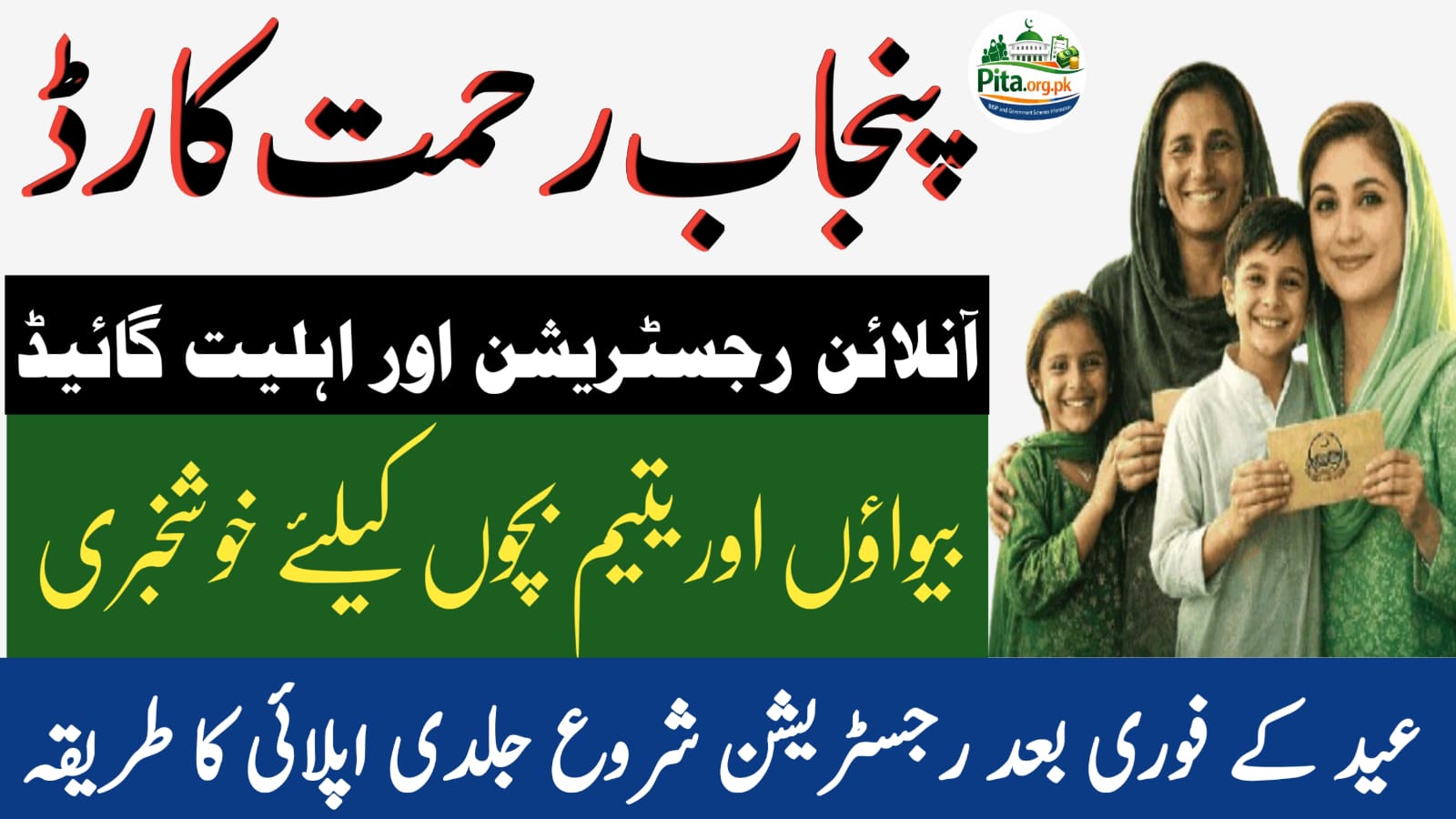
Rehmat Card 2026 Punjab – Eligibility & Apply Method
Rehmat Card 2026 Punjab – Eligibility & Apply Method
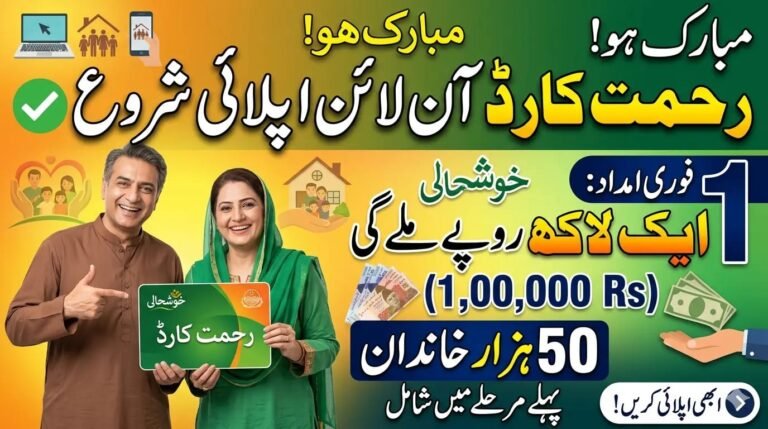
The Government of Punjab, under the leadership of Chief Minister Maryam Nawaz Sharif, has launched a landmark welfare initiative known as the Rehmat Card 2026. This program is specifically designed to provide a financial safety net to widows and orphans across the province.
Losing a primary breadwinner can push a family into extreme poverty. The Rehmat Card (also referred to as the Bewa Sahara Card) aims to protect these vulnerable segments of society by providing significant cash grants. In this guide, we will walk you through everything you need to know to secure this assistance.
Quick Overview: Rehmat Card 2026
| Program Detail | Information for 2026 |
| Primary Beneficiaries | Widows and Orphaned Children |
| Grant for Widows | Rs. 100,000 (Direct Financial Aid) |
| Grant per Orphan | Rs. 25,000 (Education/Support) |
| Registration Office | Zakat & Ushr Department / Mobile App |
| Official Launch Date | Scheduled for post-Eid-ul-Fitr 2026 |
| Scope of Program | Entire Punjab Province |

What is the CM Punjab Rehmat Card?
The Chief Minister Punjab Rehmat Card 2026 is the province’s first dedicated digital welfare system for the sponsorship of destitute households. Unlike temporary relief packages, this is a structured state sponsorship program intended to provide dignity and stability.
The core purpose is to ensure that widows and orphans do not have to beg for survival. By providing a substantial one-time or recurring grant, the government hopes to enable these families to start small businesses or cover essential living expenses independently.
Read Also: CM Punjab Rehmat Card 2026 | Rehmat Card Apply Karne Ka Tarika | Rehmat Card online Apply
Key Features and Grant Amounts
This scheme is distinct because of its transparent digital verification and high payout amounts. Here are the main highlights:
- Substantial Funding: Eligible widows receive a massive grant of Rs. 100,000 to help them regain financial footing.
- Support for Orphans: Every registered orphaned child in the household is eligible for Rs. 25,000.
- Digital Transparency: The system is linked with NADRA and the Zakat Department to ensure money goes only to those who truly deserve it.
- Phased Rollout: The first phase targets over 50,000 destitute households that have been historically neglected.
- Path to Self-Employment: The program encourages beneficiaries to use the funds for small-scale income generation.
Detailed Eligibility Criteria
To qualify for the Rehmat Card in 2026, applicants must meet the following strict criteria:
- Residency: The applicant must be a permanent resident of Punjab (verified via CNIC).
- Marital Status: Only widows (women whose husbands have passed away) can apply for the primary card.
- Orphan Status: Children must be under the age of 18 and have lost their father or both parents.
- Financial Need: Priority is given to those with a low PMT (Poverty) score or those already registered as “Mustahiq” (deserving) with the Zakat Department.
- Employment: No member of the immediate household should be a high-ranking government official or a regular taxpayer with luxury assets.
- NADRA Verification: All data must be verified through the NADRA database for authenticity.
Step-by-Step Registration Method
The registration process for the Rehmat Card has been made multi-channel to ensure accessibility for everyone.
Option 1: Visit the Zakat and Ushr Office
You can visit the local Zakat and Ushr Department office in your district or tehsil. The staff will provide you with an application form and assist you in completing the manual verification.
Option 2: Mobile App Registration
The Punjab government is launching a dedicated “Rehmat Card App” (available on the Play Store). You can upload your documents and CNIC details directly through the app to skip the long queues.
Option 3: “Maryam Ko Bataye” Web Portal
You can also register through the central provincial portal https://pser.punjab.gov.pk/. Enter your CNIC, upload the death certificate of your husband/parent, and submit the application for digital vetting.
Benefits of the Rehmat Card Scheme
The impact of this program extends beyond simple cash transfers:
- Economic Dignity: It moves families away from charity and towards state-backed rights.
- Education Continuity: The Rs. 25,000 grant for orphans helps ensure they do not drop out of school due to financial stress.
- Health and Nutrition: Increased household income leads to better food security for young children.
- Women Empowerment: By putting the money directly into the hands of widows, the state empowers them to make household decisions.
Required Documents for Application
Before applying, ensure you have the following documents ready (original and photocopies):
- Valid CNIC: The widow’s National Identity Card (must not be expired).
- Death Certificate: The official death certificate of the husband issued by the Union Council/NADRA.
- B-Form: For all orphaned children in the household.
- Electricity/Gas Bill: To verify the current residential address.
- Zakat Eligibility Certificate: If you have one from your local mosque or Zakat committee, it will speed up the process.
Latest Updates for March 2026
As of March 2026, the Punjab cabinet has officially approved the budget for the first phase of the Rehmat Card. The formal launch and distribution of cards are expected to begin immediately after Eid-ul-Fitr 2026.
Currently, the Zakat Department is conducting a door-to-door verification of existing lists to ensure no ghost beneficiaries are included. If you are a widow or guardian of an orphan, this is the best time to check your status at the local tehsil office.
Conclusion
The Rehmat Card 2026 is a significant step toward making Punjab a true welfare province. By providing Rs. 100,000 to widows and additional support for orphans, the government is tackling poverty at its root.
If you or someone you know is eligible, do not wait. Gather your documents and visit your nearest Zakat office or download the official app once it is launched. Staying informed is the first step toward securing your rights.
Would you like me to provide the specific address for the Zakat office in your district?
FAQs
1. Is the Rehmat Card different from BISP?
Yes. BISP is a federal program, while the Rehmat Card is specifically a Punjab provincial initiative for widows and orphans.
2. Can a widow receive both BISP and Rehmat Card?
In most cases, yes. The Rehmat Card is an additional layer of support for those in extreme distress, though final eligibility depends on the PMT score.
3. When will the 100,000 payment be released?
The first wave of payments is scheduled to be released in the quarter following the Ramadan 2026 period.
4. How do I check my application status?
You can check your status through the 8171 portal (if integrated) or the dedicated Punjab Zakat portal using your CNIC.
5. Can divorced women apply for this card?
The primary focus of the Rehmat Card is on widows. However, destitute divorced women may be eligible under other specific “Himmat” or “Kafaalat” schemes.
6. Is there any fee for the Rehmat Card form?
No, the form and registration process are completely free. Beware of scammers asking for “processing fees.”
7. What if my CNIC is expired?
You must renew your CNIC at NADRA before applying, as the biometric system will not accept expired identification.
8. Who do I contact for complaints?
You can call the Chief Minister’s Complaint Cell or the Zakat Department helpline at their official provincial numbers for any issues regarding registration.
You Can Read Also: Rehmat Card Eligibility Criteria 2026 – Who Can Apply?

4 Comments